
National Safety Month 2026: Trucking Trends and Safety Tips for Drivers in North Georgia and Tennessee
June is National Safety Month, an annual initiative led by various state and federal agencies to reduce preventable injuries and save lives. This year’s observance is especially timely for drivers in North Georgia and Tennessee, where some of the nation’s busiest freight corridors carry thousands of commercial trucks every day.
The trucking industry is essential to our regional economy. Interstate highways connecting Atlanta and North Georgia to major Tennessee cities like Chattanooga and Nashville move enormous volumes of freight across the Southeast.
With increased truck traffic comes increased risk. Federal transportation data indicate that large truck wrecks continue to result in thousands of fatalities and injuries nationwide each year, with driver behavior, distraction, speeding, and unsafe lane changes remaining among the leading contributing factors. Let’s discuss some safety tips to avoid truck wrecks this month, and year-round.
High-Risk Trucking Corridors in North Georgia and Tennessee
The American Trucking Associations’ economics department estimates that trucks moved roughly 72.7% of the nation’s freight by weight in 2024. Drivers throughout North Georgia and Tennessee are familiar with the region’s heavily traveled interstate network.
In North Georgia, Interstate 75 serves as a major freight route connecting Atlanta with Chattanooga and points north. Interstate 85 also carries substantial commercial traffic through Georgia, while Interstate 24 links Chattanooga to Nashville and serves as a key corridor for trucking companies moving goods across the Southeast.
Several locations consistently experience significant congestion and heightened crash risk. Recent transportation studies have identified the following areas as among the most problematic truck bottlenecks in Tennessee:
- I-24/I-40 at I-440 in Nashville
- I-40 at I-65 in Nashville
- I-75 at I-24 in Chattanooga
These locations combine heavy truck volumes, merging traffic, lane changes, and recurring congestion, creating conditions where even minor driver errors can result in serious collisions.
Other areas of concern include:
- The I-75 corridor through Chattanooga
- I-24 through downtown Nashville
- The I-75/I-285 interchange system north of Atlanta
- I-85 corridors serving Northeast Georgia
- Major freight access points near industrial parks, warehouses, and distribution centers
As freight demand continues to grow throughout the Southeast, drivers should expect truck traffic to remain significant on these routes.
Common Causes of Trucking Accidents
While commercial drivers undergo extensive training and are subject to federal regulations, truck accidents still occur for many reasons. The most common causes include:
Distracted Driving. Distraction remains one of the most serious threats on American roads. Cell phone use, navigation systems, eating, and other activities can divert attention from the roadway for critical seconds.
Speeding. Both passenger vehicle drivers and truck operators may contribute to crashes by traveling too fast for traffic or weather conditions. Large trucks require substantially longer stopping distances than passenger vehicles.
Driver Fatigue. Although federal hours-of-service regulations are designed to reduce fatigue among commercial drivers, long hours on the road can still affect alertness and reaction times.
Unsafe Lane Changes. Many truck crashes occur when motorists drive in a truck’s blind spots or cut directly in front of a tractor-trailer without allowing sufficient stopping distance.
Congestion and Aggressive Driving. The heavily traveled corridors connecting North Georgia and Cartersville to Chattanooga and Nashville, Tennessee, often experience significant congestion. Aggressive driving behaviors—including weaving, sudden braking, and unsafe merging—can quickly escalate into serious crashes.
Safety Tips for Passenger Vehicle Drivers
Passenger vehicle drivers frequently play a role in truck collisions. Federal safety officials note that many crashes involving large trucks begin with unsafe actions by motorists who fail to appreciate the limitations of commercial vehicles.
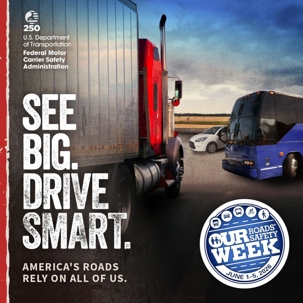
The Federal Motor Carrier Safety Administration (FMCSA) has designated June 1-5, 2026, as “Our Roads, Our Safety® Week,” a national campaign focused on helping motorists and commercial drivers safely share the road. The week serves as a reminder that roadway safety is a shared responsibility between truck drivers and passenger vehicle operators alike.
The “Our Roads, Our Safety®” campaign encourages motorists to practice several key habits when sharing the road with large trucks.
Stay Out of Blind Spots. Large trucks have substantial blind spots on all four sides. If a driver cannot see a truck’s mirrors, the truck driver may not be able to see that vehicle.
Do Not Cut Off Trucks. A truck needs significantly more distance to stop than a passenger car. Cutting directly in front of a truck can leave the driver with insufficient time to avoid a collision.
Give Trucks Room to Turn. Commercial vehicles often require wide turns. Drivers should avoid attempting to squeeze alongside a turning truck. Remember to yield whenever possible.
Don’t Follow Too Closely. Tailgating is particularly dangerous around commercial trucks. Following too closely behind a truck limits visibility and reduces reaction time. A fully loaded tractor-trailer can weigh up to 80,000 pounds and cannot stop as quickly as a passenger car.
Plan For Work Zones. Research your route, slow down, follow signs, and merge early to give workers and drivers space.
Safety Tips for Truck Drivers
Professional truck drivers perform a critical role in keeping America’s economy moving. During National Safety Month and throughout the year, safety experts encourage commercial drivers to focus on several key practices.
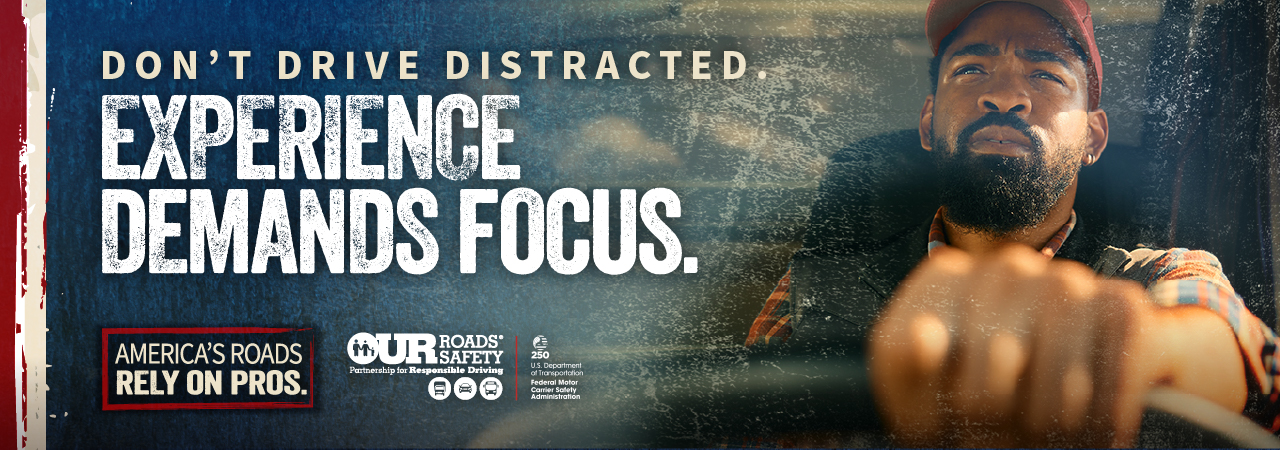
Eliminate Distractions. The FMCSA and NHTSA continue to emphasize distraction-free driving. Mobile devices, dispatch communications, and other distractions should never interfere with a driver’s focus on the road.
Manage Fatigue. Drivers should comply with hours-of-service requirements, obtain adequate rest, and recognize the warning signs of fatigue before they become dangerous.
Adjust for Conditions. Weather, traffic congestion, work zones, and roadway construction require reduced speeds and increased caution.
Conduct Thorough Inspections. Pre-trip and post-trip inspections can identify mechanical issues before they contribute to crashes.
Lead by Example. One of the central themes of Our Roads, Our Safety® Week is that professional drivers set the standard for roadway safety. Safe speeds, proper seatbelt use, and attentive driving benefit everyone sharing the road.
A Shared Responsibility
National Safety Month serves as an important reminder that every driver has a role in preventing serious crashes.
Whether operating a passenger vehicle on I-75 through Chattanooga, commuting through Nashville on I-24, or traveling North Georgia’s busy freight corridors, the safest drivers are those who remain alert, avoid distractions, and respect the unique challenges posed by large commercial vehicles.
Every safe decision behind the wheel helps prevent injuries, protect families and save lives.
Zach Pritchard: Your Truck Accident Attorney in North Georgia and Chattanooga, TN
Trucking crashes frequently involve delayed braking and high-impact collisions, which can result in traumatic brain injuries, spinal cord damage, and other catastrophic injuries. Insurance companies often attempt to dispute liability or minimize the severity of these injuries.
Pritchard Injury Firm is dedicated to helping injured clients across North Georgia and Tennessee investigate crashes, secure digital and physical evidence, and pursue compensation for medical care, lost income, and long-term needs.
If you or a loved one were injured on the road in Chattanooga or Nashville, TN, or Cartersville or Woodstock, GA, experienced attorneys at Pritchard Injury Firm can help. Contact us online for compassionate legal guidance that establishes liability and helps you get the compensation needed to recover and move forward.