
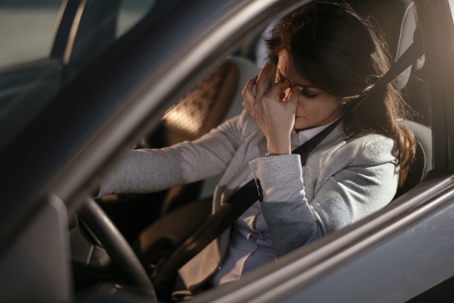
Avoiding Aggressive and Drowsy Driving in North Georgia and Chattanooga
Now that clocks have fallen back and the holidays are approaching, the roads around Woodstock and Cartersville, in North Georgia, and Chattanooga, Tennessee, are less predictable. The combination of shorter daylight hours, wet autumn weather, and seasonal stress creates conditions where even responsible drivers can cause severe car wrecks and trucking wrecks.
Furthermore, what’s happening in your car and life can impact safe driving. A unique mix of emotions, fatigue, and even medications can turn an ordinary drive into a tragedy and, unfortunately, cause catastrophic injuries. Let’s discuss how your defensive driving skills can mitigate these risks.
Drowsy or Medicated Driving: The Silent Impairment
This time of year, many of us in North Georgia and Chattanooga, TN are working longer hours, traveling more, and getting less sleep. Fatigue impairs driving as severely as alcohol — being awake for 18 hours has the same effect as a blood alcohol content of 0.05%, and after 24 hours, it’s roughly 0.10%, over the legal limit in both Georgia and Tennessee.
Drowsy driving slows reaction time, blurs vision, and causes “microsleeps” that can last a few seconds — long enough to cross a center line or miss a stoplight. The National Highway Traffic Safety Administration (NHTSA) estimates that drowsy driving caused 633 deaths in the U.S. in 2023. The agency also publicly states that drowsy driving crashes occur:
- Most frequently between midnight and 6 a.m., or in the late afternoon. At both times of the day, people experience dips in their circadian rhythm—the human body’s internal clock that regulates sleep.
- Often with only a single driver (and no passengers) running off the road at a high rate of speed, with no evidence of braking, and
- Frequently on rural roads and highways.
If you feel yourself nodding off on high-traffic areas like I-75 or Highway 92, pull over somewhere safe — like a well-lit rest area or gas station — and take a short nap or grab a coffee. The safest bet is to first have adequate rest and then begin to drive.
The same caution applies to prescription or over-the-counter medications. Pain relievers, antihistamines, antidepressants, and sleep aids can all cause drowsiness or slow reaction times. The warning on medicine labels, “do not operate heavy machinery,” includes your car, motorcycle, or truck. If this label is on your medication, talk with your doctor or pharmacist before driving.
When Emotions Take the Wheel
Anger, sadness, and stress are part of life — but when they follow us into the driver’s seat, they can cloud our judgment and slow our reactions. Physiologically, anger raises blood pressure and adrenaline levels, narrowing focus and triggering impulsive decisions. Whether it’s reacting to a slow driver or rushing through a yellow light near downtown Chattanooga, emotional driving increases the risk of a catastrophic car wreck.
If you notice your heart racing or your focus slipping, pull over safely. Take deep breaths, listen to calming music, or get out and stretch. If you’re dealing with upsetting news or overwhelming stress, give yourself time to settle before getting behind the wheel. No destination is worth a moment of road rage, pedestrian injury, or distraction.
Aggressive Driving: When Frustration Turns Risky
Aggressive driving is one of the most common causes of crashes in Bartow and Cherokee Counties — and it’s not always as obvious as road rage. While often mentioned along with distracted driving, aggressiveness can be more malicious. The NHTSA defines aggressive driving as when: “an individual commits a combination of moving traffic offenses, [...] to endanger other persons or property,” and attributes more than half of all fatal crashes nationwide to aggressive behaviors. Tailgating, refusing to let someone merge, or weaving through traffic are all examples of aggressive driving that can escalate quickly.
We’re all susceptible to what psychologists call “self-serving bias” — the idea that our own risky maneuvers are justified (“I was late!”), while others’ mistakes are inexcusable. But speeding through downtown Cartersville or cutting across lanes on I-575 can have devastating consequences, even if you think you’re saving time. The numbers tell the story: Driving 10 miles per hour over the limit on a 15-mile trip only saves about two minutes — and it increases your crash risk by up to 60%.
If you encounter an aggressive driver, don’t engage. Avoid eye contact, let them pass, and if you feel threatened, pull into a public area and call 911 or Georgia State Patrol Post 3 (Cartersville) or Post 28 (Jasper). In Tennessee, contact Highway Patrol District 2 in Chattanooga. You can’t control someone else’s behavior, but you can control your response — and that’s often the difference between a close call and a catastrophe.
A Season for Caution and Compassion
The roads through North Georgia and Chattanooga will be busier, darker, and more stressful as the holidays get closer. It’s easy to feel rushed or impatient — but emotional, aggressive, and drowsy driving all share one dangerous trait: they are preventable.
If you’re tired, pull over. If you’re angry, take a breath. If you’re late, accept it. Arriving a few minutes behind schedule is far better than never arriving at all. This is when we need to be aware of our own feelings, so we can maintain a positive attitude — even when things might get tough.
Your GA/TN Pedestrian and Car Wreck Lawyer
Contact a lawyer if you or your loved one was injured, or died, from an injury caused by the actions of another driver. Pritchard Injury Firm’s North Georgia/TN fatal accident lawyers can evaluate the claim and take steps to build and strengthen your case. Contact Pritchard Injury Firm for a free consultation.